
Thinking isn’t the problem. This is.
Most people don’t have a sleep issue — they have a boundary issue.
SLEEP

At this point, I sometimes use a phrase that gets a reaction:
Thinking addiction.
Stay with me.
It’s not that we think too much — thinking is what the brain does.
Seen this way, it becomes less of a flaw, and more of a skill gap.
And skill gaps can be worked with.
You learn, you practice, you refine.
Over time, what once felt automatic becomes something you can influence.
Once this shifts, sleep becomes much easier to access.
There are always thoughts:
reminders, plans, memories, possibilities, worries, ideas.
That’s normal.
The issue is not thinking.
👉 It’s the inability to disengage from thinking when it’s no longer helpful.
Many people were never shown how to do that.
We don’t learn how to set boundaries with thoughts in the same way we might learn to set boundaries with people or responsibilities.
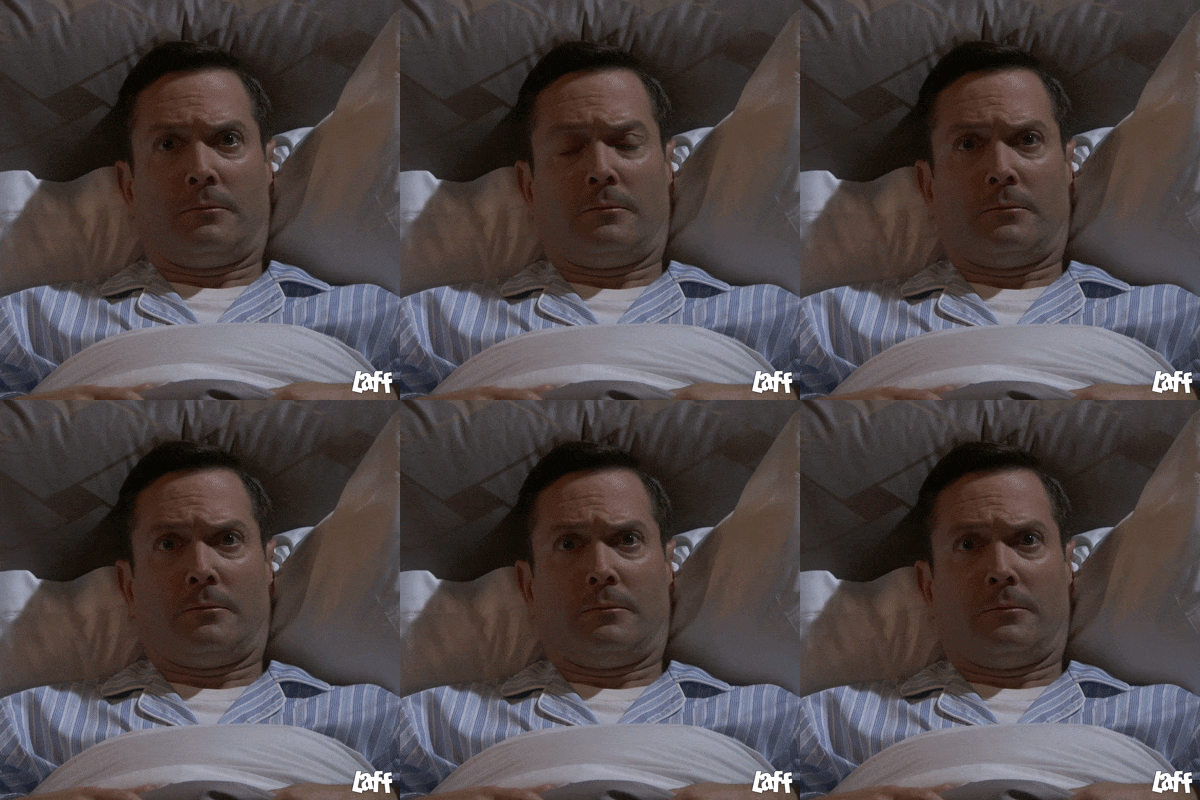
So thinking continues… into the night… into the space where sleep is meant to happen.


Next week, we’ll get into how.
© Your Mind Redesigned 2026
Join the newsletter for practical insights into stress regulation, behavioural change and subconscious patterns — plus occasional guided hypnosis recordings.
We put a lot of love and thought into our newsletters. Head over and see what we have to share with you.
Online & face to face
Home visits by arrangement
Palmwoods, Sunshine Coast
Queensland, Australia
Stay in the loop

Your Mind Redesigned acknowledges the Traditional Custodians of the lands we live on. We pay our respects to all Elders, past and present, of all Aboriginal and Torres Strait Islander nations.
Location & contact
For GPs and referrers
Referral information
How I work
Conditions I support
Download resources
Navigation
About
How it works
What I help with
Home visits
Results
Appointments
Blog
Contact
Self-Guided Resources
Healing Arts Podcast
Workshops & Events
Articles
