When the brain won’t clock off
The real reason your brain won’t switch off at night
SLEEP
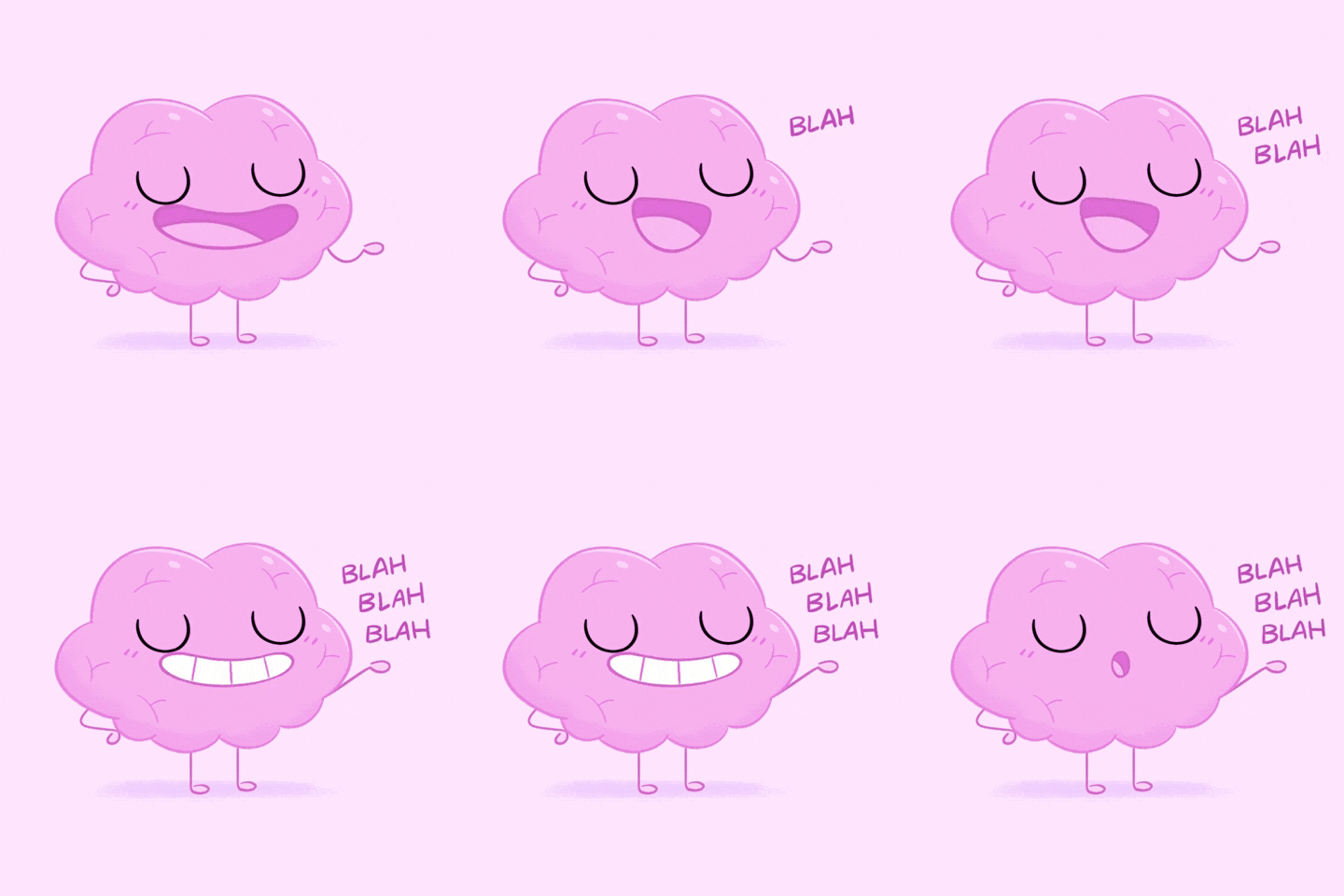
For people who struggle with the mental side of sleep, one theme shows up again and again:
They can’t disengage.
Often, there’s no underlying medical issue. No physical barrier.
Just a mind that keeps going.
I see this often in clinic.
In fact, I recently worked with a client who had been lying awake until 3am most nights following a significant life event.
After the first session, his sleep improved noticeably.
After the second, the issue had resolved.
He later shared:
“After the first session my sleep pattern improved dramatically and after the second session, I no longer have a problem with going to sleep.”
If you could listen in, it might sound something like:
“I haven’t slept well for ages… I’ll go to be early and hope tonight’s better.”
“It’s so late… tomorrow is going to be a nightmare.”
“I need to fall asleep now… why am I still awake?”
Or:
emails, school schedules, finances, small details from the day, big concerns about the future, remember that time you did that stupid thing — all looping through.
The mind is watching all of this unfold, almost like it’s binge-watching something it doesn’t want to miss.
There’s a belief that thinking will stop when it’s ready.
But often, it doesn’t.
One way I’ve found it helpful to describe is this:
The mind isn’t the thought — it’s the one observing it, identifying with it, and trying to protect you from whatever that thought represents.
Much like we aren’t our children, but we care for them, guide them, and sometimes worry about them.
The challenge is that sometimes we get too involved.
And when that happens, thinking begins to take priority over sleep.

Sleep doesn’t always take long to shift.
But the right approach has the best effects.
Not less thinking — but a different way of handling it.
That’s where our focus sits in the next post.
© Your Mind Redesigned 2026
Join the newsletter for practical insights into stress regulation, behavioural change and subconscious patterns — plus occasional guided hypnosis recordings.
We put a lot of love and thought into our newsletters. Head over and see what we have to share with you.
Online & face to face
Home visits by arrangement
Palmwoods, Sunshine Coast
Queensland, Australia
Stay in the loop

Your Mind Redesigned acknowledges the Traditional Custodians of the lands we live on. We pay our respects to all Elders, past and present, of all Aboriginal and Torres Strait Islander nations.
Location & contact
For GPs and referrers
Referral information
How I work
Conditions I support
Download resources
Navigation
About
How it works
What I help with
Home visits
Results
Appointments
Blog
Contact
Self-Guided Resources
Healing Arts Podcast
Workshops & Events
Articles
